
What's on the ARRT CT Exam: Domain-by-Domain Breakdown
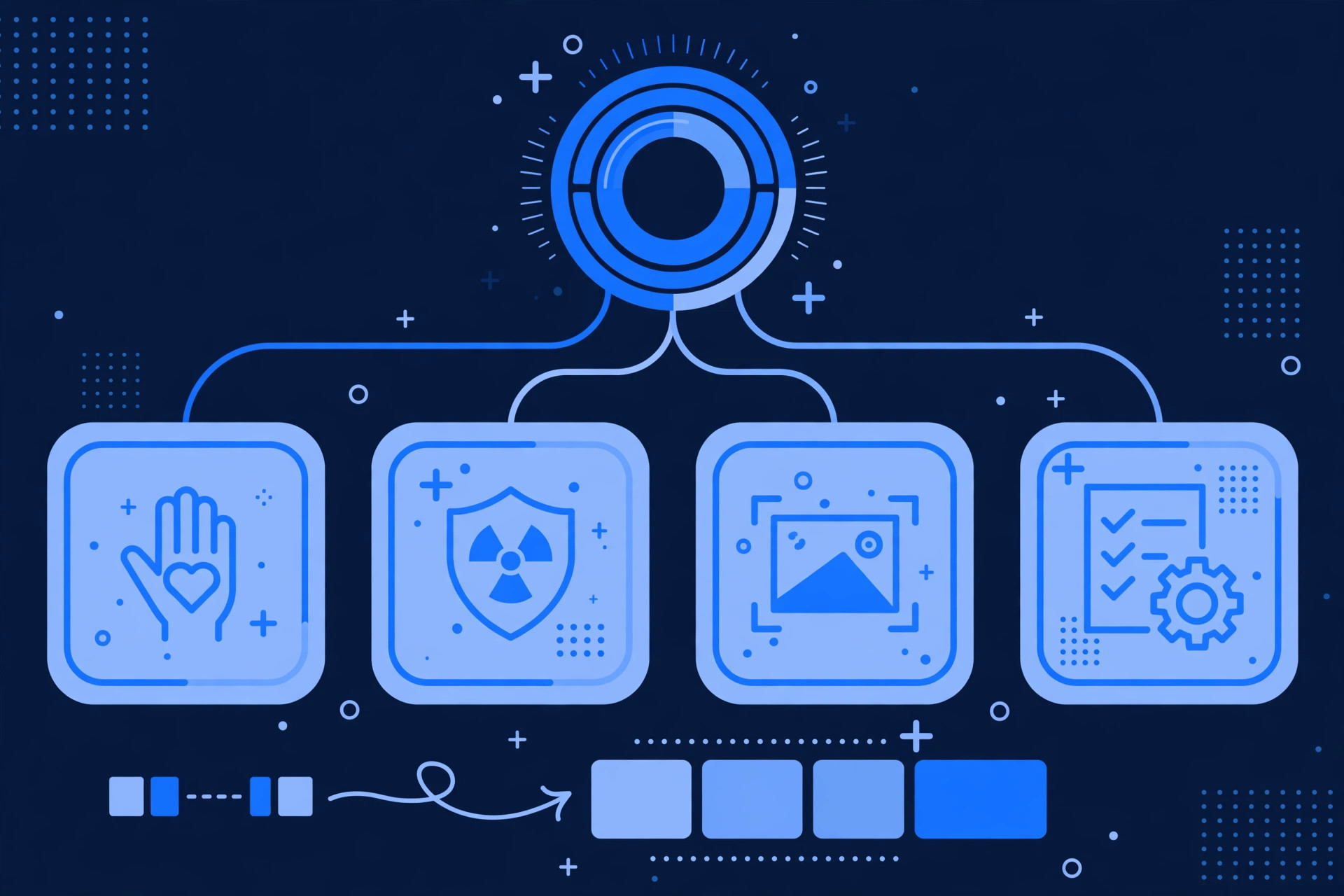
What is on the ARRT CT exam is 165 scored questions in four categories under ARRT's specifications implemented September 1, 2026: Patient Care (21), Safety (21), Image Production (52), and Procedures (71), plus 30 unscored pilot questions, for 195 questions in total (ARRT CT Examination Content Specifications, implementation September 1, 2026).
Try 3 real ARRT CT questions
Real questions from the ARRT CT bank, with the cited explanation for every answer. Tap an answer to check it.
1. A 58-year-old patient who speaks only Vietnamese is scheduled for a contrast-enhanced CT and must provide informed consent. The patient's bilingual adult daughter offers to interpret. What should the technologist do?
A qualified medical interpreter is required. Family members may filter, omit, or misstate medical information, lack knowledge of medical terminology, and their involvement compromises patient confidentiality and voluntariness. A physician's order is not a substitute for informed consent, and consent must be obtained before the procedure, not after. The Joint Commission and federal guidance require competent language assistance for patients with limited English proficiency.
Source: The Joint Commission standards on effective communication; ACR Practice Parameter on Informed Consent
2. A patient with a documented prior allergic-like reaction to gadolinium-based MRI contrast asks whether this increases the risk of a reaction to iodinated CT contrast. What is the correct response?
Per the ACR Manual on Contrast Media, gadolinium-based and iodinated contrast agents are chemically unrelated, and a prior reaction to one is not a risk factor for a reaction to the other — there is no cross-reactivity. Premedication is therefore not indicated on this basis. Gadolinium agents can cause genuine allergic-like reactions; they are simply unrelated to iodinated contrast reactions. Established risk factors for iodinated contrast reactions include a prior iodinated contrast reaction, asthma, and atopy.
Source: ACR Manual on Contrast Media
3. A patient with confirmed Clostridioides difficile infection is scheduled for a CT of the abdomen. Which infection-control practice is correct?
Clostridioides difficile spreads by the fecal-oral/contact route via hardy spores, so contact precautions (gown and gloves) are required. Alcohol-based hand rubs do not kill C. difficile spores — hand hygiene must be performed with soap and water, which physically removes them. Airborne precautions are unnecessary because the organism is not transmitted through the air.
Source: CDC/HICPAC Clinical Practice Guidelines for Clostridioides difficile Infection
Where does this breakdown come from?
It comes from ARRT itself, not from a prep company's summary. ARRT's Examination Content Specifications for Computed Tomography, board approved in July 2025 with an implementation date of September 1, 2026, lists the number of scored questions in each category and subcategory, and the content outline that follows it names the specific topics inside each one (ARRT CT Examination Content Specifications, implementation September 1, 2026).
That date matters. Candidates search for this test under both names, the ARRT CT exam and the CT registry exam, and not every page was updated when the specifications changed. If a page gives you the old 22, 22, 50, and 71 counts, it is describing the examination under the July 1, 2022 implementation, not the current one (ARRT CT Examination Content Specifications, implementation July 1, 2022). A later section shows the old and new splits side by side.
The 30 pilot questions are unscored and mixed in with the scored questions, so you cannot tell which questions count while you are testing (ARRT CT Examination Content Specifications, implementation September 1, 2026). Treat every question as scored, because from your seat, it might as well be.
What are the four categories at a glance?
Here is the whole CT registry exam on one table:
| Category | Subcategories (scored questions) | Scored questions | Share of scored exam |
|---|---|---|---|
| Patient Care | Patient Interactions and Management (21) | 21 | About 13% |
| Safety | Radiation Safety and Dose (21) | 21 | About 13% |
| Image Production | Image Formation (30); Image Evaluation and Archiving (22) | 52 | About 32% |
| Procedures | Head, Spine, and Musculoskeletal (25); Neck and Chest (22); Abdomen and Pelvis (24) | 71 | About 43% |
| Total | 165 | 100% |
Source: ARRT CT Examination Content Specifications, implementation September 1, 2026; shares are the category counts divided by 165 scored questions.
Two things stand out. First, Procedures and Image Production together account for 123 of 165 scored questions, about three-quarters of your score (ARRT CT Examination Content Specifications, implementation September 1, 2026). Second, the smallest categories are not optional: Patient Care and Safety together are 42 questions, more than a quarter of the scored exam (ARRT CT Examination Content Specifications, implementation September 1, 2026). Study only protocols and image formation, and you have left a quarter of the test to chance.
Patient Care (21 questions): what is actually in it?
Patient Care has a single subcategory, Patient Interactions and Management, worth all 21 questions (ARRT CT Examination Content Specifications, implementation September 1, 2026). It covers patient assessment and preparation, including scheduling and screening, history, lab values such as renal function, education, consent, safe transfer, and the time-out (ARRT CT Examination Content Specifications, implementation September 1, 2026).
The rest is contrast and the work around it: contrast media types and properties, special contrast considerations, administration routes and dose calculations, venipuncture, injection techniques including power injector types, scanning techniques such as timing bolus and bolus tracking, and reactions, including recognition, severity, complications, and treatment, plus patient monitoring, accessory medical devices, medications, infection control, and postprocedure care including extravasation (ARRT CT Examination Content Specifications, implementation September 1, 2026).
That is why Patient Care punches above its 21 questions. Contrast reactions, lab values, and injection technique are concrete topics with right answers you can learn cold. Study this category as defined rules and thresholds, not as general bedside manner.
Safety (21 questions): what is actually in it?
Safety also has a single subcategory, Radiation Safety and Dose, worth all 21 of its questions (ARRT CT Examination Content Specifications, implementation September 1, 2026). The outline divides it into radiation physics, radiation protection, and dose measurements (ARRT CT Examination Content Specifications, implementation September 1, 2026).
Radiation physics covers x-ray production, target interactions, the x-ray beam, and photon interactions with matter (ARRT CT Examination Content Specifications, implementation September 1, 2026). Radiation protection covers minimizing patient exposure through factors such as kVp, mAs, pitch, collimation, filtration, gating, dose modulation, and over-ranging, plus shielding and patient considerations including pediatric, adult, and pregnancy (ARRT CT Examination Content Specifications, implementation September 1, 2026). Dose measurements covers absorbed dose, effective dose, CT dose index, dose-length product, dose notification and alert, adverse event reporting, and documentation, and the category ends with personnel protection (ARRT CT Examination Content Specifications, implementation September 1, 2026).
One detail is easy to miss: SI units are the primary units of radiation measurement used on the CT examination (ARRT CT Examination Content Specifications, implementation September 1, 2026). Practice answering in SI units before test day, so a conversion never costs you a question you otherwise knew.
Image Production (52 questions): what is actually in it?
Image Production is the second-largest category, and it splits into Image Formation (30) and Image Evaluation and Archiving (22) (ARRT CT Examination Content Specifications, implementation September 1, 2026). Image Formation alone, at 30 questions, is larger than Patient Care or Safety as a whole.
Image Formation covers the components of a CT unit, imaging parameters including kVp, mAs, pitch, collimation and beam width, and acquisition slice thickness, methods of data acquisition including sequential, helical, volumetric, and dual energy or dual source, image reconstruction, and postprocessing including multiplanar reformation, 3D rendering, and quantitative analysis (ARRT CT Examination Content Specifications, implementation September 1, 2026).
Image Evaluation and Archiving covers image display, including window level and width and CT number in Hounsfield units, image quality, including spatial, contrast, and temporal resolution, noise, and quality assurance tests, artifact recognition and reduction, including beam hardening, partial volume, motion, metallic, and equipment artifacts, and informatics, including PACS, DICOM, security and confidentiality, and downtime procedures (ARRT CT Examination Content Specifications, implementation September 1, 2026).
Image Production rewards cause and effect. A parameter question and an artifact question are often the same knowledge from two directions: what a setting does to the image, and what a flaw in the image says about the setting behind it.
Procedures (71 questions): what is actually in it?
Procedures is the largest category by a wide margin, at 71 of 165 scored questions, and it splits into three subcategories: Head, Spine, and Musculoskeletal (25), Neck and Chest (22), and Abdomen and Pelvis (24) (ARRT CT Examination Content Specifications, implementation September 1, 2026). For each study listed, the outline says questions may focus on anatomy and physiology, including cross-sectional anatomy, pathological considerations, landmarks, and vasculature, and on factors including imaging planes, protocol considerations, patient considerations, postprocessing presentations, contrast media, and additional procedures such as vascular studies, biopsy, drainage, aspiration, trauma, and surgical planning (ARRT CT Examination Content Specifications, implementation September 1, 2026).
| Procedures subcategory | Scored questions | Studies named in the outline |
|---|---|---|
| Head, Spine, and Musculoskeletal | 25 | Brain and cranium, brain perfusion, temporal bones, orbits, sinuses, maxillofacial bones, mandible, and TMJs; cervical, thoracic, and lumbosacral spine and postmyelogram; upper and lower extremity, postarthrogram, shoulder, bony pelvis, and hip (ARRT CT Examination Content Specifications, implementation September 1, 2026) |
| Neck and Chest | 22 | Larynx and airway and soft tissue neck; cardiac studies including coronary artery angiogram, calcium scoring, gating, and TAVR, mediastinum, lungs, airway, chest wall, low-dose lung screening, and esophagram (ARRT CT Examination Content Specifications, implementation September 1, 2026) |
| Abdomen and Pelvis | 24 | Spleen, multiphase liver, pancreas, adrenals, and kidneys, urogram and IVU, renal stone, and GI tract; dedicated delay bladder, retrograde cystogram, colorectal, colonography, and reproductive organs (ARRT CT Examination Content Specifications, implementation September 1, 2026) |
The warning inside this table is about coverage. Your department's case mix is not the exam's case mix: the outline names studies across all of these regions whether or not your workplace performs them often (ARRT CT Examination Content Specifications, implementation September 1, 2026). Give the studies you rarely scan deliberate review time, instead of assuming work experience has covered the category.
What changed on September 1, 2026?
The category total stayed at 165 scored questions, but the distribution inside it moved (ARRT CT Examination Content Specifications, implementation September 1, 2026; ARRT CT Examination Content Specifications, implementation July 1, 2022):
| Category or subcategory | Before September 1, 2026 | From September 1, 2026 | Change |
|---|---|---|---|
| Patient Care | 22 | 21 | Down 1 |
| Safety | 22 | 21 | Down 1 |
| Image Production | 50 | 52 | Up 2 |
| Image Formation | 28 | 30 | Up 2 |
| Image Evaluation and Archiving | 22 | 22 | No change |
| Procedures | 71 | 71 | No change |
| Head, Spine, and Musculoskeletal | 25 | 25 | No change |
| Neck and Chest | 21 | 22 | Up 1 |
| Abdomen and Pelvis | 25 | 24 | Down 1 |
| Total scored | 165 | 165 | No change |
Sources: ARRT CT Examination Content Specifications, implementation July 1, 2022; ARRT CT Examination Content Specifications, implementation September 1, 2026.
The shifts are small, which is why they are easy to miss: a plan weighted to the old split quietly gives Image Production too little weight. The current outline also names topics worth a fresh check, including the time-out, power injection, adverse event reporting, informatics, and, in Procedures, esophagram, urogram and IVU, renal stone, retrograde cystogram, and colonography (ARRT CT Examination Content Specifications, implementation September 1, 2026). Check any prep resource's weights against the current document before you trust it.
How should you use these weights to study?
Study in proportion. Procedures gets the largest share of your time at about 43% of the scored exam, Image Production the next at about 32%, and Patient Care and Safety about 13% each (ARRT CT Examination Content Specifications, implementation September 1, 2026). Inside Procedures, spread time across all three subcategories: at 25, 22, and 24 questions, no region is a minor one (ARRT CT Examination Content Specifications, implementation September 1, 2026).
Practice at test pace, too: 195 questions in 195 minutes is about one minute per question (CareerEmployer CT practice test guide). And remember, you need a scaled score of 75 or higher, and because the score is scaled, no one can honestly promise a fixed number of correct answers in advance (ARRT Examination Requirements). Aim to be comfortably strong across all four categories.
What this article can't do for you
This breakdown tells you what the exam contains and how it is weighted. It cannot tell you where you stand inside it. Two candidates can both read that Procedures is 71 of 165 scored questions (ARRT CT Examination Content Specifications, implementation September 1, 2026) and be in opposite positions: one solid on protocols and weak on image formation, the other the reverse. Reading the weights does not reveal your own pattern of misses.
That is what a diagnostic is for. Upward Prep's free 25-question ARRT CT practice test mirrors the current category weights, times you like the real thing, and gives cited explanations for every answer, so you can put your hours into the categories and subcategories that are actually costing you points. Try the free ARRT CT practice test →
Frequently asked questions
what is on the arrt ct exam
What is on the ARRT CT exam is 165 scored questions in four categories: Patient Care (21), Safety (21), Image Production (52), and Procedures (71), plus 30 unscored pilot questions (ARRT CT Examination Content Specifications, implementation September 1, 2026). Procedures is the largest category, at about 43% of the scored exam.
arrt ct content specifications
The ARRT CT content specifications are ARRT's official outline of the topics on the examination and the number of scored questions in each category and subcategory. The current version was board approved in July 2025 and implemented on September 1, 2026, with a total of 165 scored questions (ARRT CT Examination Content Specifications, implementation September 1, 2026).
arrt ct test plan
The test plan is the same document candidates mean by the content specifications: Patient Care 21, Safety 21, Image Production 52, and Procedures 71 scored questions (ARRT CT Examination Content Specifications, implementation September 1, 2026). If a resource uses 22, 22, 50, and 71, it is using the older plan implemented July 1, 2022 (ARRT CT Examination Content Specifications, implementation July 1, 2022).
how many questions are on the arrt ct exam
There are 195 questions presented in total: 165 scored questions plus 30 unscored pilot questions, in 3 hours and 15 minutes, about one minute per question (ARRT CT Examination Content Specifications, implementation September 1, 2026; CareerEmployer CT practice test guide). The pilot questions are not identified during the exam, so every question should be treated as scored.
arrt ct practice test
A useful ARRT CT practice test mirrors the current specifications, heavy on Procedures (71) and Image Production (52) and lighter on Patient Care (21) and Safety (21), and explains every answer with a citation (ARRT CT Examination Content Specifications, implementation September 1, 2026). Check any practice test's category weights against that split before you rely on its score.